
Automating responsive search ads without automating bad claims
A review framework for generating varied RSA assets while protecting factual accuracy, landing-page alignment and compliance text.
Written by Touch Stone Editorial Team
Reviewed by Touch Stone Ads Technology Limited
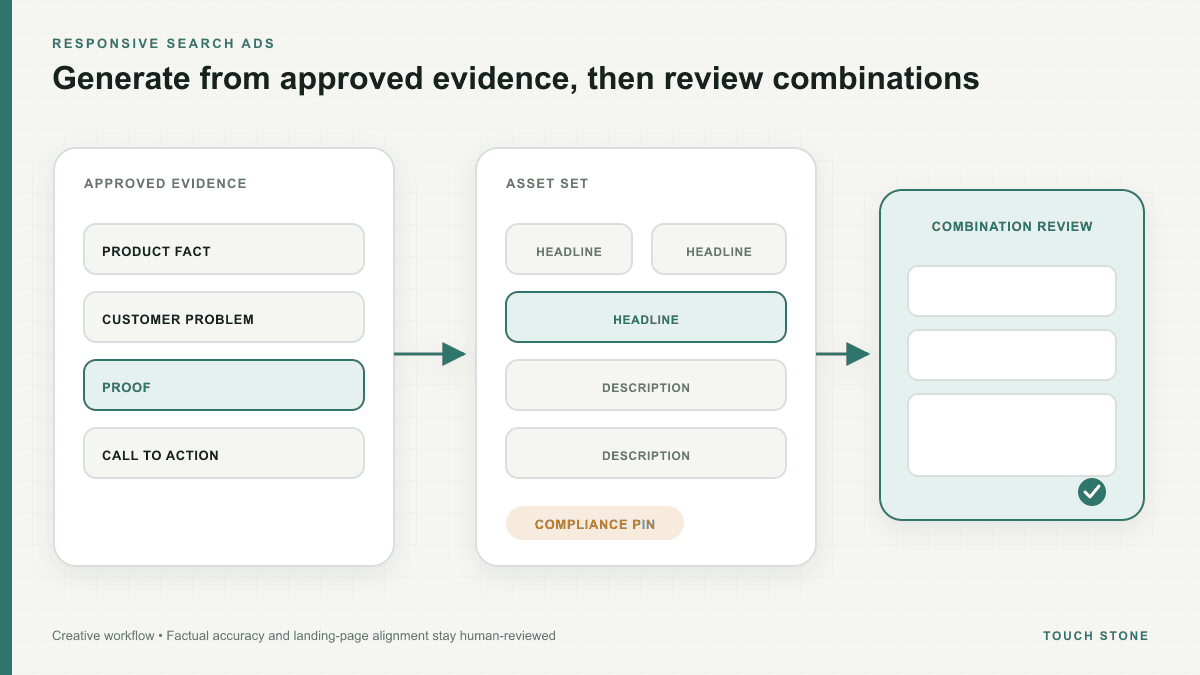
The content boundary should exist before generation
An ad generator should begin with an evidence pack: approved product facts, markets, offers, prohibited claims, brand terms and landing-page content. Without that boundary, fluent copy can introduce an unsupported superlative, an unavailable feature or a price that no longer matches the destination.
Treat generated headlines and descriptions as drafts. Each asset should retain the evidence or instruction it came from so a reviewer can distinguish a useful variation from an invented claim.
Responsive ads are a combination system
Google can serve different combinations of RSA headlines and descriptions. A set of lines that each looks acceptable can still create repetition, ambiguity or a broken promise when combined. Review semantic compatibility across likely combinations, not just grammar one asset at a time.
Google's guidance emphasizes varied, relevant assets and allows multiple headlines and descriptions. A generator should optimize for distinct ideas—problem, capability, proof and action—rather than producing near-duplicates with swapped adjectives.
- Verify every factual claim against the approved source.
- Check that headlines remain clear in different orders.
- Remove near-duplicates that add no new meaning.
- Compare offers, geography and calls to action with the landing page.
Pin intentionally when order is a real constraint
Pinning can ensure legally required or strategically essential text appears in a particular position, but it reduces the combinations available to the system. Do not pin merely to preserve the first draft's preferred order.
When compliance requires pinning, document the reason and test multiple approved variations for the pinned position where possible. That preserves some flexibility while keeping the mandatory message visible.
Ad Strength is input feedback, not the approval decision
Ad Strength can help identify asset variety and completeness, but it does not verify a claim, offer or regulatory obligation. Keep brand and compliance review independent of the score.
The release record should include the final assets, pins, landing page, reviewer and rejected claims. This makes later edits safer and helps the generator learn from real editorial decisions rather than only from platform feedback.